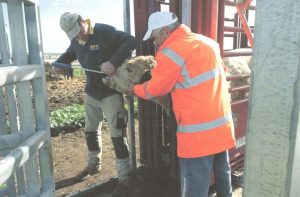
The drought had caused us a great deal of pain, we were forced to sell off stock to survive. It was a sad day indeed to see them leave the property. We were reduced from 136 head to 62 comprising 3 x Bulls, 9 x Steers and 50 Cows and Heifers. As a matter of interest to other Galloway Producers, at the beginning of the drought we had ten (10) non-Galloway Breed Cows which were heifers at the time of purchase, after which, all had produced strong and healthy calves for a number of years prior to the drought, these animals formed a part of our commercial herd. These animals were larger in stature than the Galloway Breed and were in very good condition {Score 4-5}, however, with very little feed on the ground it was necessary to consider their future at 'The Run'. Unfortunately, the hay we purchased was of poor quality and as it happened the non- Galloway breed animals were the first to suffer. Even though the Galloway were still holding their own on poor paddock grass, they were being fed the same hay as the non-Galloway breed which put our core stud breed stock at risk. Good quality hay was available but expensive so it was decided to offload those animals that were considered excess to our needs, hence, the sell off of the non-Galloway breed stock began. Checking the entire herd became a daily occurrence. With the non-Galloway breed cattle still on property, it became apparent differences were appearing in relation to the condition scores between the two breeds especially so when they were together in the same paddock and on the same feed regime. Subsequently, the non-Galloway breed were first to be sold off. Financially we did extremely well as they were in reasonable condition for sale given the drought conditions at the time. Our non-Galloway stock came in the top percentile for c/kg live weight at the Northern Victoria Livestock Exchange {NVLX}. The income received was spent wisely by sourcing good quality hay. I might say was just over the hill East from our farm which reduced transport costs considerably and the hay was first class Oaten rounds. As a direct consequence of the above experience we decided not to go back into breeding larger animals of a different breed to Galloway. The Galloway breed proved to be, without a doubt, very hardy being able to survive on poor grass and a supplementary feed regime of poor quality hay. This attribute gave us confidence to continue with our beef production enterprise.